
Sewage coming up through a toilet, tub or floor drain is a different job from a burst supply line. The water carries waste, so what can be saved, what has to be thrown out, and how the cleanup is done all change.
What to do right now
- Stop running water in the house. Every flush, shower and load of laundry sends more water toward the same blockage.
- Keep children and pets out. The CDC says to keep them away from the area until cleanup is done.
- If you have to go in, wear rubber boots, rubber gloves and goggles. That is the CDC's advice whenever sewage is involved.
- Stay clear of outlets, cords and the breaker panel if any of them are near the water.
- Take photos and video before anything is moved, for your insurer.
- Work out where the problem is: your own line, the City's sewer, or a septic system. That decides who you call to clear it.
Why a sewage backup counts as black water
The IICRC S500 water damage standard lists sewage as Category 3 water, the most contaminated category. Its definition also covers wasteline backflows that come from beyond any trap "regardless of visible content or color." So water that comes up a floor drain and looks fairly clear still counts.
A toilet that overflows from the tank, or from a bowl with no waste in it, is a different case. The standard says the category depends on the source and on what the water touched afterward, and that time and temperature can change it. The crew should decide based on what they find, not on a guess over the phone.
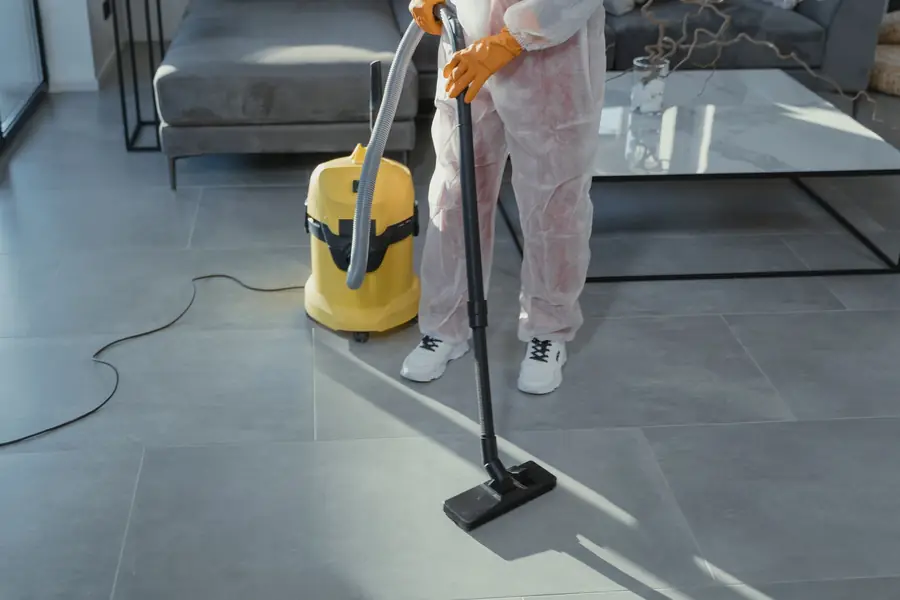
What comes out and what can be cleaned
The CDC says to remove and throw away drywall and insulation that has been contaminated with sewage, and to throw away anything you can't clean or dry quickly. Its list includes mattresses, carpeting, carpet padding, rugs, upholstered furniture, stuffed animals, pillows and paper products. Hard surfaces such as tile, concrete, sinks and countertops get cleaned with hot water and laundry or dish detergent.
On a professional job, the IICRC standard says the contamination is dealt with before drying starts, using containment and protective gear for the workers. In practice that usually means plastic sheeting around the work area, tear out of the porous materials, cleaning what stays, and only then the fans and dehumidifiers.
If you clean up a small spot yourself
- Keep the boots, gloves and goggles on the whole time.
- Wash the clothes you wore in hot water and detergent, separately from everything else, as the CDC recommends.
- Wash up with soap and water when you're done.
- If you use bleach on hard surfaces, open the windows first and never mix it with ammonia or other cleaners.
- Dry the area within 24 to 48 hours if you can. The CDC uses that window to keep mold from starting.
Anything bigger than a small spot on a hard floor, or anything that reached carpet or drywall, needs a crew with the right equipment.
Whose sewer line is it in Midland?
The City of Midland explains it this way. The part plumbers call the "city side" is the sewer tap, which runs from your property line to the main sewer line in the alley or street. The line from your property line to your house is your private service line, so a clog or break on that stretch is a job for your plumber.
The City's Water and Wastewater Maintenance Division maintains over 1,400 miles of water and sewer lines, and its duties include emergency repair of wastewater stoppages. You can report a problem through the City's SeeClickFix portal, which has a Sewer Stoppage category. If neighbors on your street are backing up at the same time, say so in the report.
Homes on a septic system
Out in the county, some homes are on septic instead of City sewer. The CDC lists the warning signs of a failing system: sinks and toilets that drain slowly, floor drains that overflow, and sewage showing up outside. If you see them, it says to have the system professionally inspected and serviced. One more CDC warning for after a flood: don't pump the tank more than halfway, or it can float out of the ground.
To keep it from happening again, the EPA says a household septic system should be inspected at least every three years and is typically pumped every three to five years. Only human waste and toilet paper belong in the toilet, which rules out wipes labeled flushable. The EPA also says never to pour cooking oil or grease down the drain.
Does insurance cover a sewer backup?
It depends on your policy. The Texas Department of Insurance says some policies cover water or sewage from outside your house that comes in through sewers or drains. TDI also says even all risk policies usually don't cover sewer backups, and it lists backup of sewers or drains as an extra coverage many companies sell as an add on. Check your declarations page now, before you need it. More on claims on our insurance claims page, and on pricing on our restoration cost page.
Sources: CDC cleaning safely after a disaster, IICRC S500 position statement, 2026, City of Midland water FAQ, City of Midland Water and Wastewater Maintenance, City of Midland SeeClickFix, CDC septic system guidelines, EPA septic care, TDI disaster claims FAQ, TDI on all risk and named peril policies, TDI home insurance guide. Sources checked and page updated October 16, 2026.
Common questions
Is water from an overflowing toilet sewage?
Not always. Under the IICRC S500 standard, sewage and backflows from beyond a trap are Category 3, whatever the water looks like. An overflow from the tank or from a bowl with no waste is a different case, and the crew decides the category from the source and what the water touched.
Who fixes the sewer line in Midland, me or the City?
The City of Midland says the sewer tap, from your property line to the main in the alley or street, is the City side. The line from your property line to your house is your private service line, so problems there are for your plumber.
Does homeowners insurance cover a sewage backup in Texas?
It depends on the policy. TDI says some policies cover sewage that comes in through sewers or drains, but even all risk policies usually exclude sewer backups. Many companies sell backup of sewers or drains as an add on.